What is berberine?
Berberine is a bitter yellow compound found in the bark and roots of several plants, including Indian barberry, known in Ayurveda as daruharidra. Supplements contain the purified compound, not the whole plant.
Berberine is a yellow compound extracted from the bark and roots of plants such as daruharidra (Indian barberry). Most supplements contain the hydrochloride salt, berberine HCl. Research has focused on metabolic markers, but berberine is not a medicine and is not a substitute for one. It interacts with many drugs and must not be used in pregnancy, while breastfeeding or in infants.
| What it is | A plant alkaloid, not a herb |
|---|---|
| Plant sources | Berberis species, including daruharidra (Berberis aristata) |
| Common form | Berberine hydrochloride (HCl) |
| Amounts used in studies | Often 500 mg, two or three times a day, with meals |
| Most common side effects | Constipation, diarrhoea, gas, nausea |
| Do not use | In pregnancy, while breastfeeding, or in infants |
Taken from real searches in India.
Berberine is a bitter yellow compound found in the bark and roots of several plants, including Indian barberry, known in Ayurveda as daruharidra. Supplements contain the purified compound, not the whole plant.
Berberine HCl is the hydrochloride salt, the form used in most supplements because it is stable and easy to measure. About nine-tenths of the weight of berberine HCl is berberine itself. A label should say which of the two its milligrams refer to.
Yes. It is sold in India as a supplement, and its plant source, daruharidra, has a long history in Ayurveda.
Most human research looks at markers such as blood glucose, cholesterol and body weight. These are medical matters, so we make no health claim for berberine. The US National Center for Complementary and Integrative Health publishes a plain summary of the research.
No. Metformin is a prescription medicine with decades of evidence and medical supervision behind it. Berberine is a supplement. Never stop or swap a prescribed medicine for a supplement without your doctor.
Only if your doctor agrees. Taking both could lower blood sugar more than intended.
That is a marketing phrase. Berberine and prescription weight-loss medicines are not comparable in how they work or in the evidence behind them.
Studies have often used 500 mg two or three times a day. We do not give dosing advice for berberine. Speak to a doctor, especially if you take any medicine.
In studies it was usually taken with meals or shortly before them, split across the day.
Digestive ones are the most common: constipation, diarrhoea, gas, nausea and stomach cramps.
There is no strong evidence of liver or kidney harm at the amounts studied, but research is limited. People with liver or kidney disease should ask a doctor first.
Yes, with many. It can affect how the body processes some drugs and can add to the effect of medicines for diabetes and blood pressure. Check with a doctor or pharmacist before combining it with any regular medicine.
Do not use it during pregnancy or while breastfeeding, and never give it to infants: it can worsen jaundice in newborns and cause serious harm. People on regular medication should ask a doctor first.
No. It is sold as a supplement and is not an approved treatment for any disease.
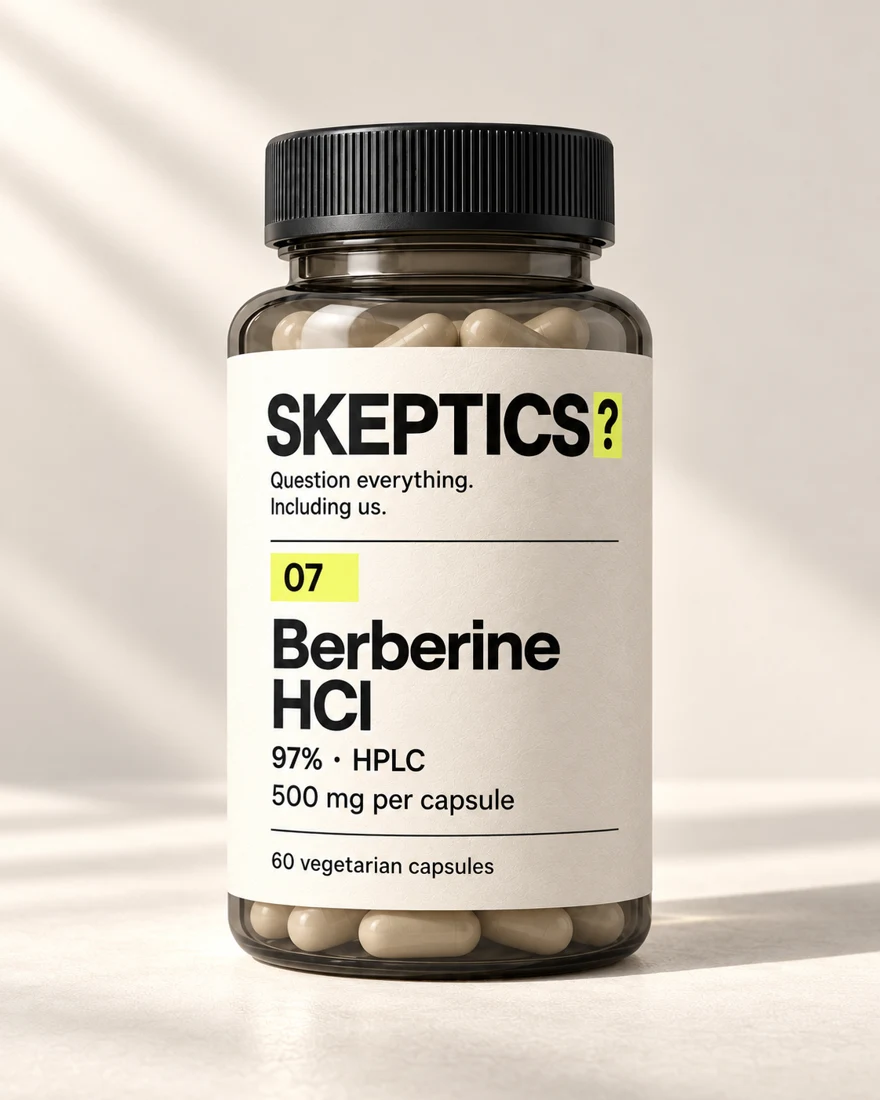 Skeptics Berberine HCl500 mg · 97% berberine HCl by HPLC60 vegetarian capsules · ₹999See the specification
Whichever brand you choose, check the plant part, the active-compound percentage, the method used to measure it, and the heavy-metal results for the batch.
This guide is general information about an ingredient, not medical advice and not a claim about any product. Research on an ingredient is not a clinical trial of a particular supplement. Speak to a doctor before taking any supplement if you are pregnant, breastfeeding, have a medical condition or take medicines.