What is triphala made of?
Three fruits in equal parts: amla (Phyllanthus emblica), haritaki (Terminalia chebula) and bibhitaki (Terminalia bellirica). The name means three fruits.
Triphala is a classical Ayurvedic formula made from three dried fruits: amla, haritaki and bibhitaki. It is used mainly for digestion and regularity, and its stool-loosening effect is well recognised. Controlled human trials are limited. It should be avoided in pregnancy, and anyone who needs a laxative every day should see a doctor.
| What it is | Equal parts amla, haritaki and bibhitaki fruit |
|---|---|
| Botanical names | Phyllanthus emblica, Terminalia chebula, Terminalia bellirica |
| Common forms | Churna (powder), tablets, extract capsules, juice |
| Marker compounds | Tannins, including gallic acid |
| Strength of evidence | Long traditional use; few controlled trials |
| Main cautions | Pregnancy, bowel conditions, diabetes medicines |
And how good the evidence is.
| Taken for | Evidence | What the studies show |
|---|---|---|
| Regularity | Some | Its stool-loosening effect is well recognised, and a few small trials support it. |
| Everyday digestive comfort | Traditional | One of the most used Ayurvedic digestive formulas. Controlled human trials are limited. |
| Appetite and acidity | Traditional | Long traditional use. Little trial data. |
| "Detox" and weight | None | Popular claims. We found nothing worth quoting. |
Grades are our reading of published human trials on the ingredient, not tests of this product. Moderate: several controlled trials agree. Some: a few do. Early: small or preliminary. Traditional: long use, little trial data. None: nothing worth quoting. How we grade evidence
Taken from real searches in India.
Three fruits in equal parts: amla (Phyllanthus emblica), haritaki (Terminalia chebula) and bibhitaki (Terminalia bellirica). The name means three fruits.
It is the main traditional use, and its loosening effect on stools is well recognised. A few small trials support it. If constipation lasts more than a couple of weeks, see a doctor.
Traditionally it is taken at night with warm water. No trial has compared night with morning.
Many people do, and Ayurveda describes daily use. Long-term safety data from trials is limited. Needing a laxative every day is a reason to see a doctor.
It often is. If it causes cramps or loose stools, take it after food or reduce the amount.
They work differently. Isabgol (psyllium husk) is a bulk-forming fibre with strong clinical evidence for constipation. Triphala has less trial evidence and acts more like a mild stimulant laxative. For most people, isabgol with enough water is the better-proven first choice.
A few small studies exist, but we found nothing convincing. Any weight change from looser stools is not fat loss.
"Detox" is not a measurable outcome. There is no evidence that triphala removes any specific toxin.
It is used traditionally for general digestive comfort. Trial evidence is limited, and in some people it causes gas.
Churna is the ground fruit. Tablets usually compress the churna. Extract capsules are concentrated, so the amounts are smaller. The label should say which form you are buying and the ratio of the three fruits.
No. Triphala guggulu adds guggul resin and other ingredients. It is a different product with different uses.
Avoid it in pregnancy. Haritaki, one of the three fruits, is traditionally not advised for pregnant women.
Do not give it to a child without a paediatrician's advice.
Loose stools, cramps and gas are the most common. Stop if they persist. It may lower blood sugar slightly, so people on diabetes medicines should check with a doctor.
These are traditional uses. We found no human evidence strong enough to quote for any of them.
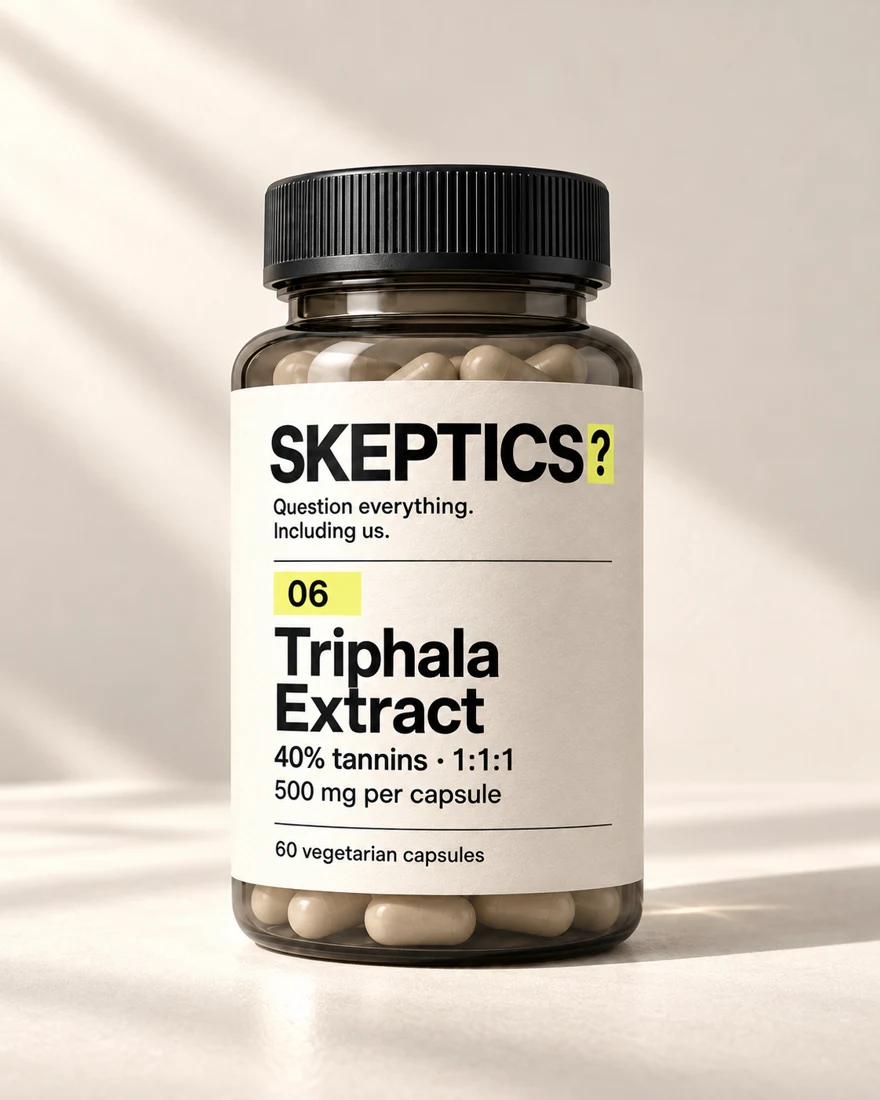 Skeptics Triphala Extract500 mg · three fruits in equal parts · 40% tannins60 vegetarian capsules · ₹499See the specification
Whichever brand you choose, check the plant part, the active-compound percentage, the method used to measure it, and the heavy-metal results for the batch.
This guide is general information about an ingredient, not medical advice and not a claim about any product. Research on an ingredient is not a clinical trial of a particular supplement. Speak to a doctor before taking any supplement if you are pregnant, breastfeeding, have a medical condition or take medicines.